U.S. Army – Medal of Honor Website Redesign
Modernizing a legacy system without compromising trust or historical integrity

Snapshot
- Role: Lead UX Designer (Discovery & Design)
- Scope: Responsive redesign, system structure, and stakeholder alignment
- Context: Public-facing government platform honoring Medal of Honor recipients
- Focus: Balancing modernization with institutional trust and historical reverence
Why This Work Mattered
The Medal of Honor website is more than a digital product—it is a public archive of national significance.
For service members, families, educators, and historians, it is often the first—and sometimes only—point of access to these stories.
Any friction, inconsistency, or perceived misstep doesn’t just affect usability—it affects trust.
This work ensured modernization could happen without compromising meaning.
The Situation
The site needed to support multiple audiences:
- Active-duty service members (often mobile-first)
- Veterans and families
- Journalists and press teams
- Educators and students
- Researchers and historians
At the same time, it operated within:
- Legacy templates and rigid structures
- Strict Army branding governance
- High sensitivity to visual and content changes
The Real Problem
The system created both usability and trust challenges:
- Not responsive—difficult to use on mobile devices
- Rigid structure that didn’t scale for future recipients
- Fragmented experience across audiences with different needs
- High sensitivity to change due to historical and emotional significance
The challenge wasn’t redesigning a site.
It was modernizing a system without undermining its meaning.
My Mandate
I was responsible for:
- Designing a responsive, scalable system for future recipients
- Improving usability across devices and audiences
- Preserving tone, hierarchy, and institutional integrity
- Navigating governance, branding, and stakeholder sensitivity
This required balancing usability improvements with long-term trust.
Key Decisions
This work was defined by decisions about preservation, scale, and responsibility.
Modernize structure, not meaning
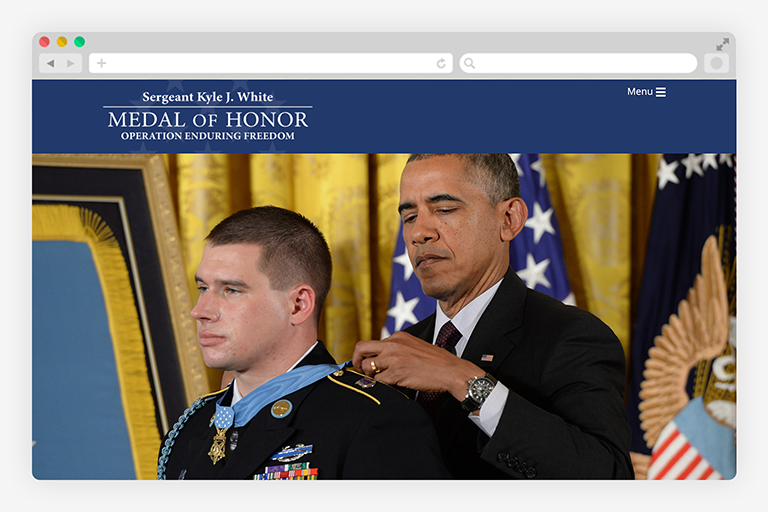
We improved layout, interaction, and accessibility while preserving tone and visual identity.
Why: Any perceived rebrand risked undermining trust. The content—not the interface—carried the emotional weight.
Tradeoff: Limited visual experimentation, but maintained institutional credibility and acceptance.
Design forward, not backward
We chose not to retrofit legacy entries, and instead built a system for all future recipients.
Why: Retrofitting historical entries introduced risk and complexity. A forward-looking system ensured consistency and scalability.
Tradeoff: Visual inconsistency between legacy and new entries, but a sustainable long-term model.
Design for multiple audiences
We structured the experience to support different needs:
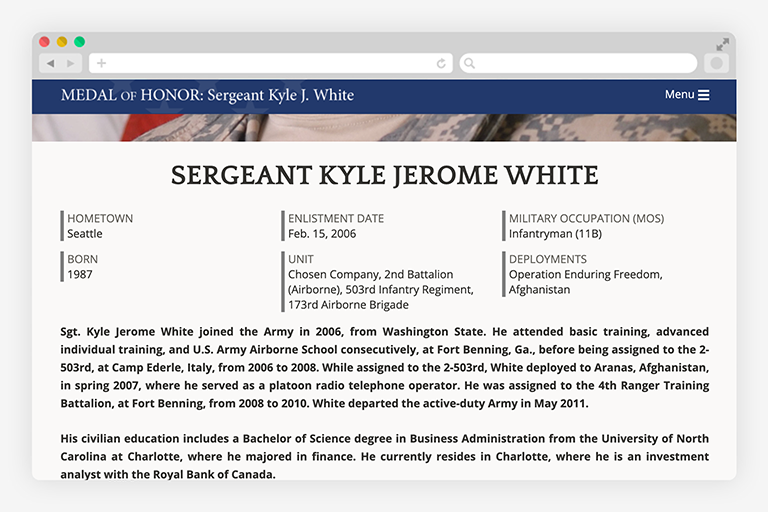
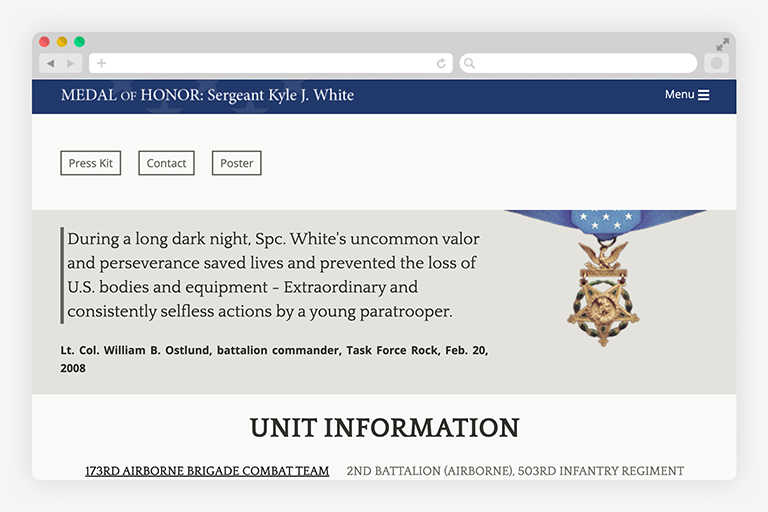
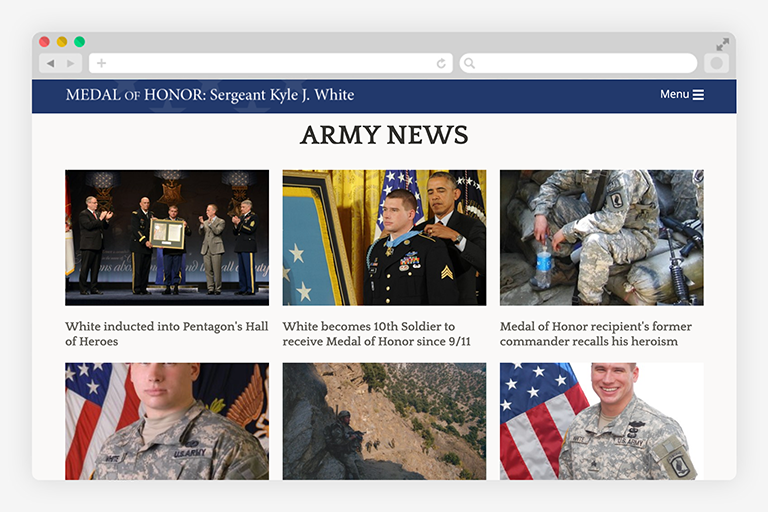
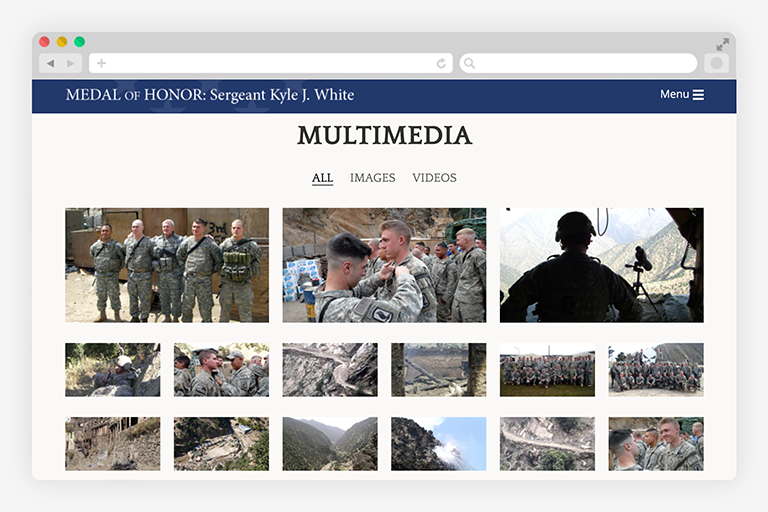
- Press → imagery and media access
- Educators → narrative flow and timelines
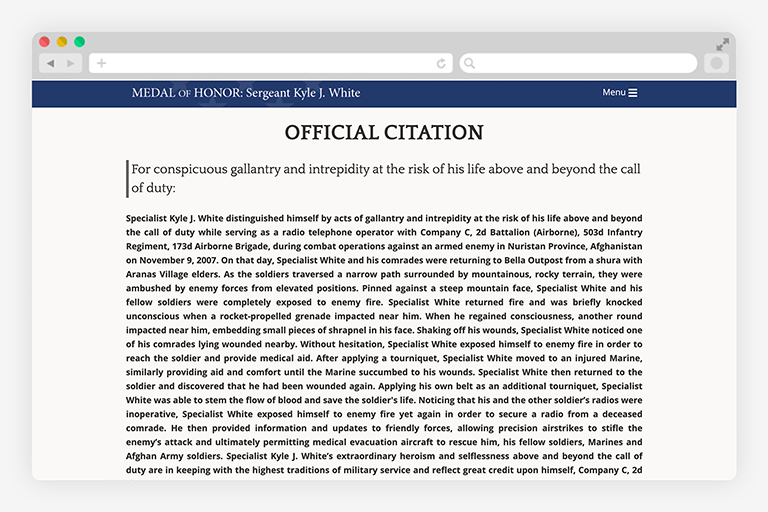
- Researchers → structured citations
Why: A single audience model would fail real-world usage.
Tradeoff: More complex layouts, but a more usable and purpose-driven experience.
Design within governance, not against it
We worked within Army branding and review processes, making decisions transparent and justifiable.
Why: Approval processes were necessary and non-negotiable. Clear rationale reduced friction and rework.
Tradeoff: Slower iteration cycles, but stronger alignment and trust.
What I Built
Responsive Design System
- Mobile-first layouts
- Flexible grid system
- Scalable templates for future recipients
- Improved readability across devices
This made the site usable in real-world conditions, including low-bandwidth environments.
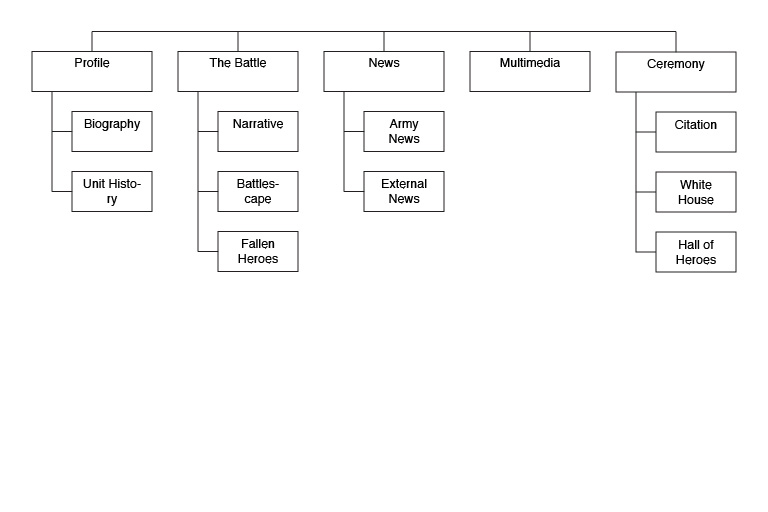
Modular Content Structure
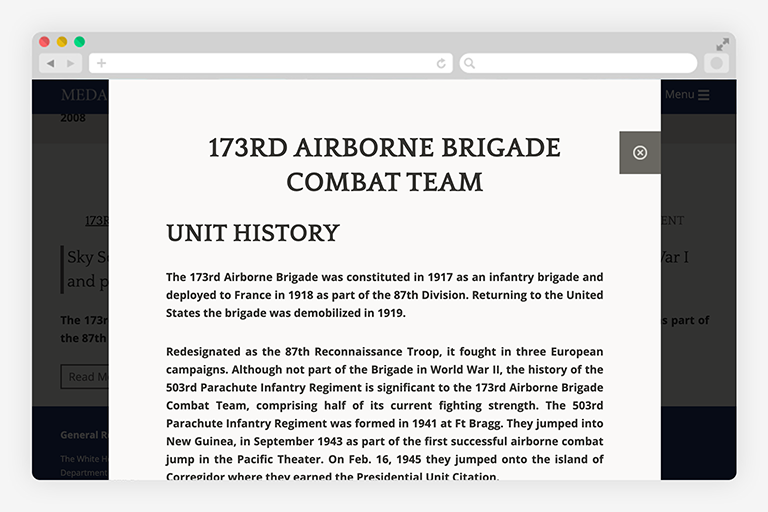
- Structured layouts supporting narrative, media, and citations
- Reusable patterns for future expansion
- Clear hierarchy across content types
This enabled long-term sustainability without repeated redesign.
How I Led
This work required alignment across:
- Public affairs and communications teams
- Content strategists
- Developers and technical teams
- Army stakeholders and reviewers
My role focused on:
- Facilitating structured design reviews
- Making tradeoffs explicit and visible
- Navigating sensitivity without slowing delivery
- Aligning stakeholders around shared goals
Progress depended on clarity—not persuasion.
Outcomes
The redesigned system:
- Became fully responsive across devices
- Improved access to narratives, media, and citations
- Introduced reusable design patterns for broader Army use
- Established a scalable model for future Medal of Honor recipients
- Reduced risk in future updates through standardized structure
More importantly:
- Reduced hesitation around future updates
- Created a trusted model for ongoing evolution
What I Learned
- In high-trust systems, perception matters as much as usability
- Constraints define the solution space—not limit it
- Modernization must respect meaning, not just improve function
- Clear rationale is critical in governance-heavy environments
How This Connects to My Work
This project reflects how I approach design in high-stakes environments:
- Modernization without erasure: improve systems without losing meaning
- Designing within governance: constraints shape better outcomes
- Clarity as alignment: visible decisions reduce risk and friction
Download ZIP wireframes (8 MB) | Back » | Army.mil - Medal of Honor Recipient Sergeant Kyle J. White